HAVE WE OVER-MYSTIFIED THOSE STAND-ALONE WORDS?
Hilda Geraghty
Published in The Furrow, December 2023
This article posits that Jesus’ words alone, taken in the context of his passion and death, are enough in themselves to explain the logic of how sins are forgiven. Quite simply, it is the one who has suffered sins who has the right to forgive them. It is not at all a question of Jesus appeasing an offended God. Jesus’ forgiveness is a pure act of merciful love, rebuilding the relationship between us and himself/God, between ourselves and others. Only his resurrection shows forgiveness to be an act of supreme wisdom, and not foolishness.

In interpreting these words of Jesus at the Last Supper through the lens of a literal interpretation of the fall into sin of Adam and Eve in Genesis 2-3, it is my view that the teaching Church is clouding, rather than clarifying, their meaning for people today.
We first need to ask, why did Jesus die as he did? The historical reason for his passion and death is that he was tried and condemned by the religious powers of his day for alleged blasphemy, and not any wrongdoing. He was then executed on a trumped-up political charge. The reason for his condemnation was that, under questioning by the High Priest, he had affirmed himself to be the One sent by God, the Messiah in Jewish understanding. Yet He himself, the evening before his death took place, gave quite a different interpretation, “…the chalice of my blood… which will be poured out for you and for many, for the forgiveness of sins.”
Jesus was careful to explain the meaning of his death in those solemn and memorable words, faithfully handed down to us. They stand alone, without further explanation in the Gospel narratives. However, can they not be left to speak as sufficient in themselves? The current theological explanation, (1) following a long tradition, has interpreted Christ’s death as making reparation to God for our sins, and only then, in consequence, forgiving and healing our sinful selves. This happens when the doctrine of original sin, rather than a state of universal sin or imperfection, is the interpretive key.
That sin of the two first humans in Genesis 2-3 is seen primarily as one of disobedience: a major offence against God’s command was committed, to be undone and made up for. The gates of paradise are locked and guarded. Christ’s passion and death is therefore interpreted primarily as an act of obedience to the Father. In this way he undoes that first sin, making reparation to God for it (and all its consequences in the rest of us). It’s a balancing of accounts, a satisfaction of justice, a payment of a price, a sacrifice to appease the disapproval of God and a consequent readmission, in hope, to a lost paradise. We needed a new Adam to undo the fall, and he is the Christ. Indeed, this parallel between the two Adams, the old and the new, is drawn so strongly that any questioning of a less literal approach to the first Adam and to the concept of original sin is thought to threaten the salvation wrought by Christ. The Catechism of the Catholic Church (1992) warns, “The Church, which has the mind of Christ, knows that any tampering with the doctrine of original sin undermines the mystery of Christ.” (2) Is that mystery so easily undermined by any scrutiny of this parallel between the real, historical Jesus and the distant, ahistorical and possibly figurative Adam?
This parallel, at any rate, is increasingly unsatisfactory, as it portrays God to be something of a hard master. The many different metaphors it gives rise to in attempts to explain Christ’s death have become problematic. The ideas of ransom, paying a price, assuaging God’s anger by sacrifice, seeking divine favour through the ritual sacrifice of the blood of Jesus… create a negative image of God. They suggest that God needed to be reconciled to us, instead of the other way round.
WHAT DOES SALVATION MEAN?
In the Gospel accounts of the Eucharist we are left with, Jesus makes no reference to Adam, even though presumably, as Jews, both he and the apostles would have been aware of the first book of the Bible. However, if we set aside our preoccupation with the Genesis predicament, can his words not suffice in themselves as a stand-alone statement? Forgiveness, in this view, has to be another word for salvation. What we call ‘salvation’ cannot be the literal opening of closed gates to admit us to heaven, but the restoring of relationship between ourselves and God, between ourselves as humans, and with our world. It is the building up of the Whole, the drawing together of the scattered unity we are all meant to be. It is brought about by love alone, and the grace that springs from the Infinite Source of Love. Love is the evolutionary energy that propels the world forward, and it is ever called to overcome the evil that breaks relationships, pulling evolution back.
PIECING TOGETHER AN ANSWER
Surely an essential reference is the picture of God that Jesus gave us in one of his most famous parables: like the father of the ‘Prodigal Son’, God is looking out for the approach of us sinners, and planning a welcome. This all-loving God is always, and has ever been, willing to forgive our offences and re-establish any broken relationship with humanity. Any ‘anger’ on the part of God seen in the Old Testament can be seen as God’s frustration at the way we constantly turn away from our own good, fail to evolve spiritually, and block divine plans for our benefit. “What I desire is mercy, not sacrifice,” said Jesus, quoting Hosea, defending himself for eating with sinners. (4) God is not demanding that Jesus die before forgiving us.
WHENCE ANY NECESSITY FOR JESUS TO DIE AS HE DID?
Healthy human that he was, Jesus did not want to die, as his agony in the garden testifies. However, more than anything he wanted to do the Father’s will and he freely chose to follow it. This is his sacrifice, his costly gift: to do the Father’s will.
So, what was God’s active will that Jesus undertook to follow? This is the central issue. “The ‘Father’s will’, of which Jesus was so conscious, consisted in being completely human: and this was the path that led to the Cross. In the words of Herbert McCabe: ‘The fact that to be human means to be crucified is not something that the Father has directly planned but that we have arranged. We have made a world in which there is no way of being human that does not involve suffering.’ Jesus can be seen in this light as the most perfectly human person ever to have existed: for him, to live was to love.” (5)
To expand on this view, God willed that Jesus be true to himself, to stand for the truth of who he was, the One sent by God, before the Sanhedrin and before the world. He was to stand as God’s sign to humanity, even though he will be ‘a sign that is rejected’ as Simeon told Mary, his mother. (6) That is exactly the stance he took the following day as his passion unfolded. Questioned by Caiaphas as to whether he was the one sent by God, Son of God and Messiah, Jesus, answering in the affirmative, doubled down on his answer, adding “…and you shall see the Son of Man coming on the clouds at the right hand of the power of God.” (7) This, of course, sealed his fate, as he knew it would.
In human terms, like any good parent, God could not actively wish his Son to suffer and die. However, God passively allowed it, having otherwise to suspend human freedom. Nailing Jesus to a cross is how we, for our part, dealt with the truth that Jesus stood for. It is a typical consequence of truth speaking to power, or as Rupert Shortt put it, “…but also because of a more general human trait- our tendency to despise and reject full humanity when we encounter it.” (8)
GOD’S RESPONSE
What would we expect God’s response to be? If God were to bring an enormous unthinkable disaster on humankind, would we not have to admit we deserved it? If ever fire and brimstone were to happen, surely the horrific death of God’s rejected Messiah would bring it down on us?
But what did happen? NOTHING! No disaster, no fire from heaven to burn up the earth. No threats from Jesus, no condemnation by him of anyone, no recrimination, no reproach. Only words of forgiveness! “Father, forgive them, for they know not what they do!” and to the repentant sinner beside him, “This day you will be with me in paradise!” If forgiveness is the salvation we need, then repentance is the key to unlocking it.
Yet who can forgive the offence but the one who suffers it? In his passion and on the cross Jesus puts Godself uniquely in the position to forgive sin by suffering it, in all its destructiveness, and he does so as both God and man. No one now can say, ‘It’s easy for God to forgive sin! God never had to suffer it, like me!’
In this logic, the ‘price’ that Jesus pays is paid not to God, but to us as sinners. “Whatever you did to anyone… you did it to me.” (Mt 25, 40)
VERTICAL AND HORIZONTAL BEAMS
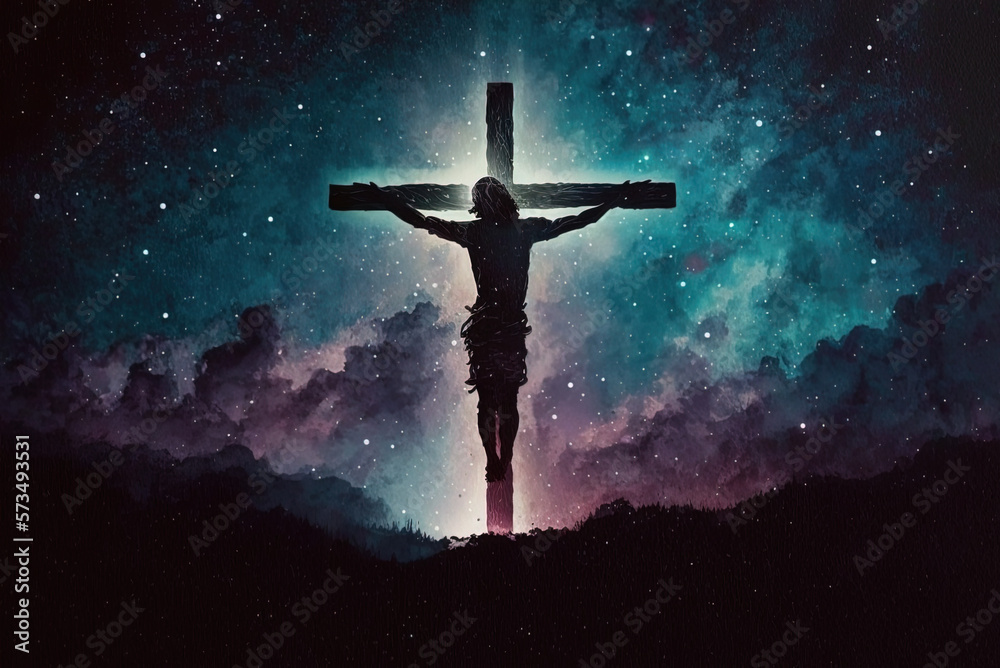
The barbaric nature of crucifixion can symbolise the nature of sin. The vertical beam may be seen as our supreme offence against God, the rejection of God’s Messiah,- other sins not affecting God directly, due to the divine transcendence. The horizontal beam may be seen as our inhumanity to each other, and to the rest of creation. But how can these wrecked relationships be repaired? Repenting, seeking forgiveness and forgiving in turn, are the only things that repair the fabric of relationality. Over and over again they rebuild the Whole, in a process vital to the on-going evolutionary struggle out of failure, negativity and destruction into love. Jesus invites us all in turn to spread this saving energy throughout the world by seeking and granting forgiveness to each other, constantly. He made a point of building it into the Our Father, the one formal prayer he left us. He doesn’t want us coming to worship if we are blocking this healing energy among ourselves. (9) He gave us the religion of repenting and forgiving.
IS IT FOOLISH TO BE FORGIVING?
However in purely human logic, to forgive is foolishness. Why forgive? Even trivial slights can turn people against each other indefinitely, when egos clash. So how to forgive monstrous evil? How to forgive someone who caused the death of a loved one? An abuser who ruined your life, or that of your child? Or people who wrecked your country, robbed, oppressed, cheated, tortured, starved you? Those who don’t apologise, express no remorse? It evokes the natural response, “I can never forgive them!” We are trapped in the negativity of the other(s), in unending hatred and enmity. Our personal or collective evolutionary journey can end in failure and loss, love being the great casualty.
Is good strong enough to overcome evil? Can love for the other, or at least pity for them, be stronger than the offence they have done us? (Not for a moment does forgiveness mean to minimise the gravity of an offence.) That is the drama in every life. Forgiveness is love overcoming evil, appearing strangely weak, but in reality having the upper hand. It can be helpful to see the perpetrator in the first place as the pitiable victim of evil in their own way, and with the dire consequence of falling away from the Whole and so being ‘lost’, unless and until they repent. There is no good place to go when a person(s) turns away from the Whole. Forgiveness is leaving a door open for them to come back.
BUT CAN WE JUSTIFY FORGIVENESS?
Only the resurrection of Jesus justifies forgiveness as supreme wisdom, and not supreme foolishness. It is God’s answer to the cross we imposed on Jesus, and vindicates the truth of his claim. The Supreme Forgiver walked out of the tomb on the third morning, free from death and decay, raised to eternal youth and beauty, prototype of the final evolved humanity that unites in Omega. What we all long for, in our wildest dreams! Only faith in this resurrection, promised to all who forgive, can give us the will and the strength to forgive. In Jesus’ final words at the Last Supper in John’s Gospel, we get a glimpse of what salvation really is: the union of all in him, Alpha and Omega, the Whole finally completed. “Father, may they be one in us, as I am in you and you are in me, that the world may believe that you have sent me.” (10)
This kind of deep love, in positive relating, is the energy enabling us finally to become fully human. It reveals Christ as opening up humanity’s evolutionary path, leading through restored relationships to a united humanity, to be one day raised as the risen Mystical Body of Christ. (11)
WHAT ABOUT EXPIATION?
Expiation, atonement, or reparation, “.… is the act of showing that we are sorry for bad behaviour by doing something or accepting punishment”, to use the dictionary definition. As such, in justice, that debt corresponds to us, not to the innocent Christ, a debt we should not only pay to Christ/God but also to each other, and to our natural environment. In interpreting salvation we surely do better to see expiation as a consequence of forgiveness, rather than a payment for it in advance, our grateful response to God’s healing mercy.
CONCLUSION
It is my view that we do not need the lens of original sin and the fall to make sense of Jesus’ words “…for the forgiveness of sins.” We can grasp their meaning in a way that makes far more human sense on their own, the underlying logic being that to forgive an offence you must be the one who suffers it. The Mass will forever be the centre of the Christian life, and the Cross its supreme symbol. It will continue to be foolishness for unbelievers but wisdom in the sight of God. “For Jews demand signs and Greeks seek wisdom, but we preach Christ crucified, a stumbling block to Jews and folly to Gentiles, but to those who are called, both Jews and Greeks, Christ the power of God and the wisdom of God.” (12)
However, it is urgent for the official Church teaching explain the Cross in a way that makes sense to people today.Otherwise the Cross can erroneously paint an image of a legalistic God who needs agonising payment from God’s Son before being able to forgive and admit us to heaven. This ‘scapegoat’ interpretation is the focus of those who criticise the Christian faith. Let the Church clearly teach that it is not God who is putting Jesus on any cross, but we. The Cross is our rejection of God’s sign. That responsibility lies squarely with us, and we need to own it, because to heal our world, we urgently need both to repent and to forgive at every level. It is a colossal and tragic mistake on our part if the world misinterprets the central Christian message, because people will just walk away from it. Love alone is the force that overcomes evil, repairs and restores the relationships that make up the Whole, and saves the world. Its name is the crucified and risen Jesus, Son of God and Saviour, the Sign that triumphed over rejection, to lead us forward into our unified destiny.

(This article may be downloaded from Academia.edu, author Hilda Geraghty.)
References
- The Catechism of the Catholic Church, 1992. Art. 396-421
- Ibid, p 87.
- That love is the evolutionary force of the universe was the conviction of Pierre Teilhard de Chardin SJ.
- Mt 9, 13 and Hos 6,6
- The Tablet, Features/ Why did Jesus die on the Cross? 17 June 2023
- Luke, 2,35.
- Mark 15,62.
- Ibid. The Tablet.
- Mt 5, 23-4
- Jn 17:21
- To see Christ in evolutionary terms was the vision of Pierre Teilhard de Chardin SJ..
- I Cor., 1:18-24
 Seeing whole